
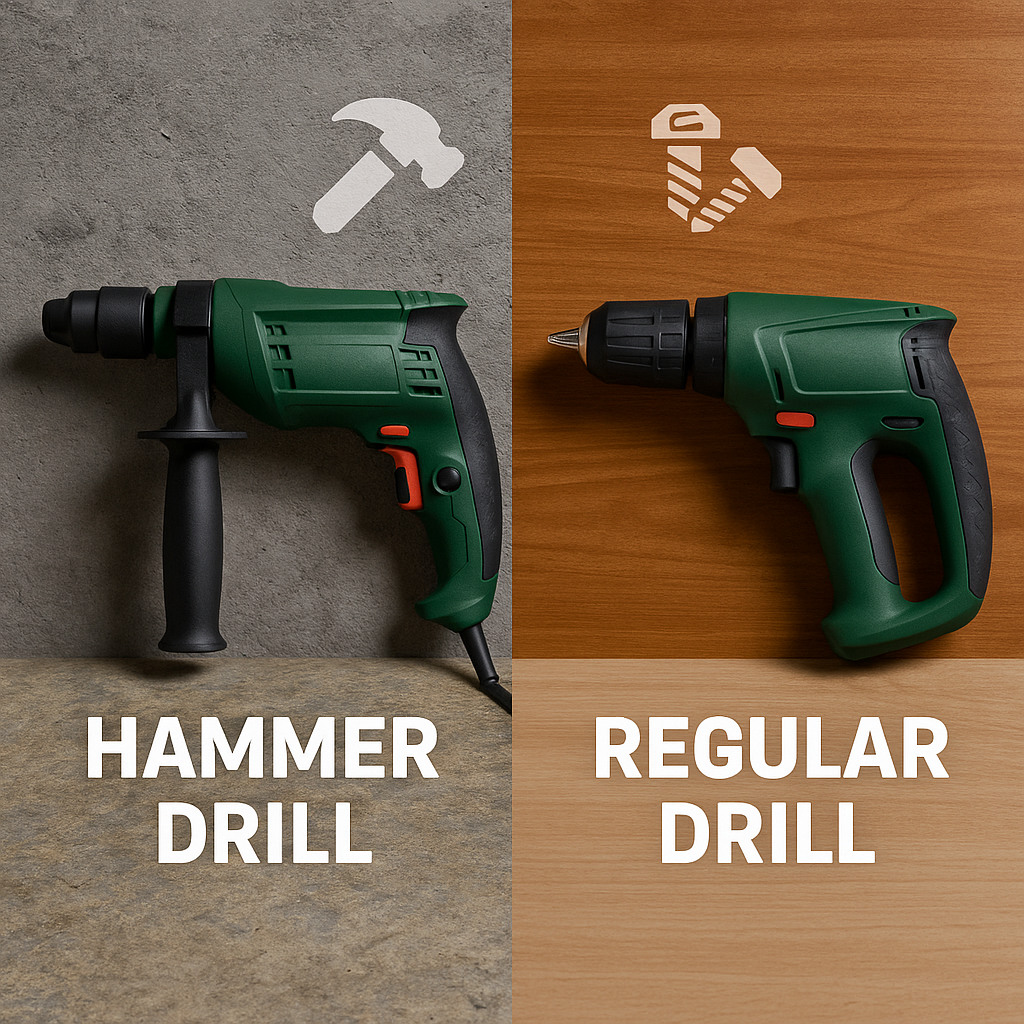
Choosing the right drill for your project can be a puzzling decision, especially when confronted with options like a regular drill and a hammer drill. At a glance, these tools might appear quite similar—they both spin drill bits to bore holes—but when it comes to functionality, power, and best use cases, they are quite different. This detailed guide will help you understand the key differences, so you can confidently pick the right drill for your needs.
What is a Regular Drill?
A regular drill is the classic, versatile tool that spins a drill bit to make holes in materials such as wood, metal, and plastic. With variable speed controls and sometimes a reversible function, it is perfect for everyday tasks—assembling furniture, hanging shelves, drilling into drywall, or light metalworking.
Its main purpose is simple: rotate the drill bit smoothly to create precise holes or drive screws. Regular drills are generally lightweight, compact, and easy to maneuver, making them an essential tool for most DIY enthusiasts and homeowners.
What is a Hammer Drill?
A hammer drill looks much like a regular drill but adds a powerful hammering motion while the drill bit spins. This means, alongside the rotational force, the drill’s mechanism rapidly thrusts the bit forward and backward, striking the surface with high-impact pulses. This hammering action is what distinguishes it.
Hammer drills are made to handle tough materials like concrete, brick, and stone that require more than just rotation to penetrate effectively. The rapid impacts help break up the material as the bit turns, making drilling through masonry much faster and easier compared to a regular drill.
Key Differences Explained
1. Mechanism of Action
- Regular Drill: Rotates the drill bit only.
- Hammer Drill: Rotates and delivers repeated hammering blows to the bit.
2. Ideal Materials
- Regular Drill: Best suited for wood, plastic, metal, and soft materials.
- Hammer Drill: Works excellently on concrete, brick, masonry, and other hard surfaces.
3. Power and Speed
- Regular drills typically operate at higher speeds but lower torque.
- Hammer drills produce lower speed but much higher torque and impact force, enabling easier drilling in hard materials.
4. Weight and Design
- Hammer drills are heavier and bulkier due to the hammering mechanism.
- Regular drills are lighter and easier to handle for extended periods.
5. Versatility
- Many hammer drills come with a switch to turn off the hammering action, functioning like a regular drill for standard tasks.
- Regular drills do not have this feature, limiting their use on masonry and tough materials.
6. Noise and Vibration
- Hammer drills create more noise and vibration because of their impact action compared to regular drills.
7. Drill Bits
- Regular drills use typical twist drill bits made for softer materials.
- Hammer drills require special masonry bits designed to withstand frequent impacts.
When Should You Use Each Drill?
- Use a regular drill:
For general household projects such as drilling holes in wood, assembling furniture, or installing light fixtures. If you rarely need to drill into any masonry, a regular drill is often enough. - Use a hammer drill:
When dealing with concrete, brick walls, stone, or heavy-duty construction projects. If you’re installing anchors in concrete or drilling through tough surfaces, a hammer drill saves time and effort. - Consider a hammer drill if:
You want one tool for both regular and masonry jobs since most hammer drills let you switch between hammer and drill-only mode.
Maintenance Tips for Both Drills
- Keep your drill clean and free of dust or debris.
- Regularly check the drill bit condition and replace worn or damaged bits.
- Lubricate moving parts if recommended by the manufacturer.
- Ensure batteries are charged and stored properly if cordless.
- Use correct drill bits for the material to avoid undue stress on the motor and prolong tool life.
Final Thoughts
While a regular drill is perfectly suited for most everyday drilling and driving tasks, a hammer drill specializes in tough, heavy-duty drilling into hard materials. Hammer drills often come at a higher price and are heavier to handle, but the time saved and efficiency gained on masonry work make them invaluable, especially on construction sites or renovation projects.
Choosing the right drill boils down to understanding the scope of your work: if your focus is on woodworking, metal, or general home tasks, a regular drill will serve you well. For tackling concrete or stone, invest in a hammer drill—it’s purpose-built for the job.